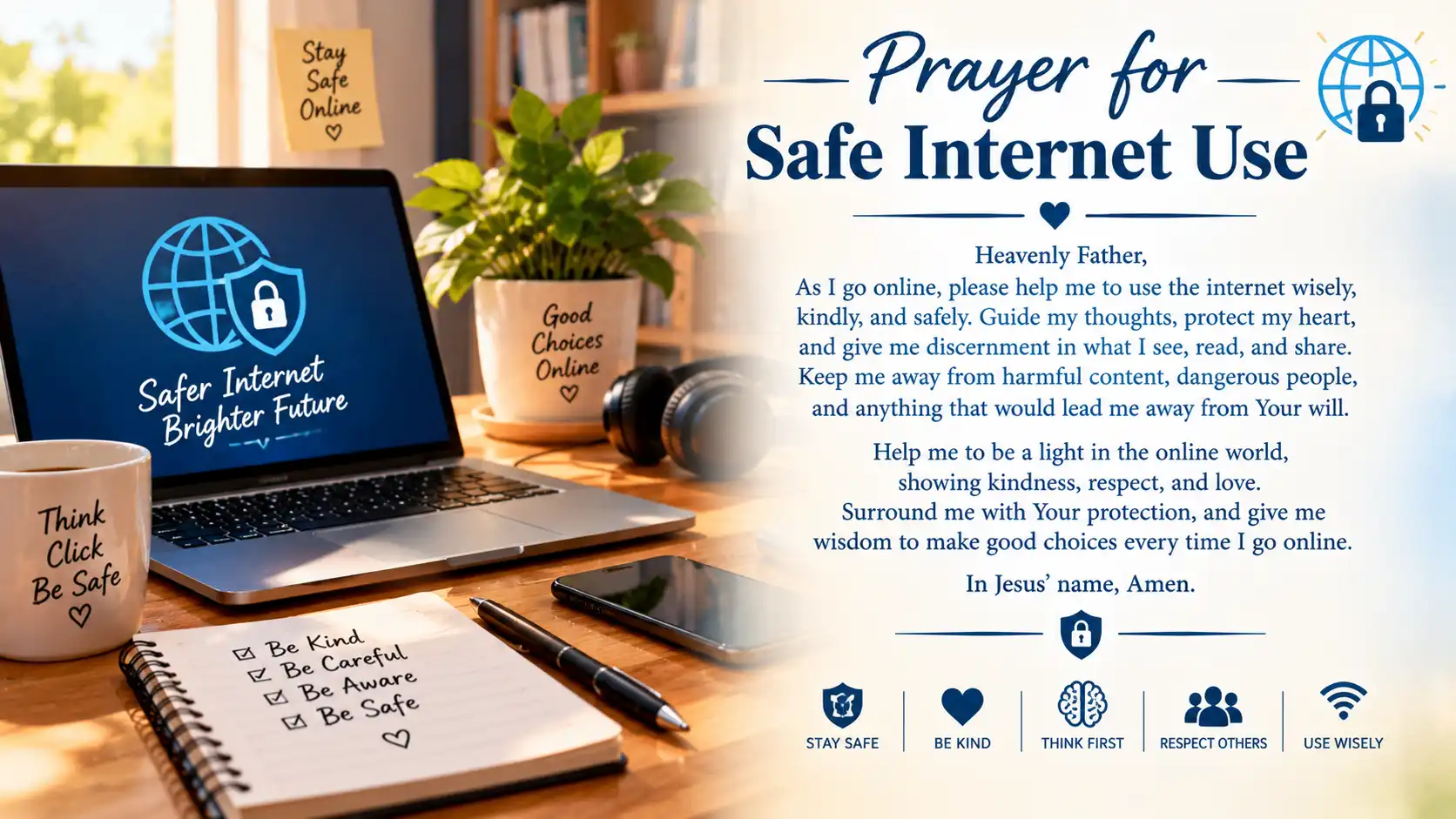
May God guide every click, guard every heart, and help us use the internet with wisdom, kindness, and faith.
A mother watches her son scrolling through his phone late at night. At first, he is laughing at funny videos. But soon, his mood changes after reading cruel comments and comparing his life with strangers online. She wants to protect him, but she knows she cannot watch every screen or control every message he receives.
Many families face this challenge today. The internet helps us learn, work, connect with loved ones, and share our faith. Yet it can also expose us to harmful content, online scams, cyberbullying, temptation, and fear.
A prayer for safe internet use invites God into the way we communicate, learn, and make decisions online. Psalm 119:105 says, “Thy word is a lamp unto my feet, and a light unto my path” (KJV). Just as a lamp guides our steps, God’s wisdom can guide our digital choices.
Prayer is the turning point that helps us combine faith with practical action. Here are meaningful prayers and simple habits to help you and your family use the internet safely.
What Are Prayers for Safe Internet Use?
Prayers for safe internet use are honest conversations with God about our online activities, relationships, decisions, and responsibilities. They ask for wisdom when choosing what to watch, courage when facing online pressure, and discernment when something on a screen seems suspicious or harmful.
These prayers also recognize that our digital lives affect our spiritual and emotional well-being. A careless comment can hurt someone deeply. An unwise click can expose private information. Spending endless hours online can distract us from family, rest, worship, and the people sitting beside us.
Bringing these concerns to God helps us remember that faith and responsibility belong together. Prayer does not replace parental controls, privacy settings, strong passwords, or careful judgment. Instead, it can strengthen our commitment to use those tools wisely.
If you are a parent protecting your children, a student navigating social media, or an adult working online, you can ask God to shape your choices. The goal is not to fear technology but to use it with a clear mind, a loving heart, and healthy boundaries.
20 Prayers for Safe Internet Use by Purpose
These prayers address different digital challenges, from protecting children to resisting harmful content. Choose the one that reflects what you or your family needs today.
Prayers for Wisdom and Discernment
1. Prayer for wisdom before clicking Emotion: trust
Heavenly Father, guide my decisions whenever I go online. Help me pause before clicking unfamiliar links or believing everything I read. Teach me to seek truth instead of following every passing opinion. Let wisdom lead my digital choices. Amen.
2. Prayer against online deception Emotion: courage
Lord, give me courage to question messages that seem too good to be true. Help me recognize dishonest offers, fake identities, and misleading information. Keep me from acting out of fear or excitement. Teach me to check the facts before I respond. Amen.
3. Prayer for pure thoughts online Emotion: confession
Merciful God, forgive me for the times I have entertained content that pulled me away from what is right. Give me strength to leave harmful pages and make better choices. Renew my mind and help me honor You in private as well as in public. Amen.
4. Prayer for responsible digital choices Emotion: gratitude
Father, thank You for the opportunities technology provides to learn, create, and connect. Help me use these gifts responsibly rather than carelessly. May my online activity reflect gratitude for the abilities You have given me. Amen.
5. Prayer for discernment on social media Emotion: awe
Creator God, remind me that every person I encounter online has a story beyond the screen. Help me recognize what deserves my attention and what I should leave behind. Fill me with wonder for Your creation, not envy of someone else’s carefully edited life. Amen.
Prayers for Children and Family Safety
6. Prayer for children’s online protection Emotion: intercession
Loving Father, watch over children as they explore the digital world. Protect them from people who would manipulate, threaten, or exploit their innocence. Give parents patience to teach without shaming and children courage to speak when something feels wrong. Amen.
7. Prayer for parents navigating technology Emotion: surrender
God, I cannot monitor every moment my child spends online, and that uncertainty sometimes frightens me. Help me release what I cannot control while faithfully doing what I can. Give me wisdom to set boundaries, listen carefully, and build trust at home. Amen.
8. Prayer for family conversations about the internet Emotion: longing
Lord, I long for a home where children feel safe asking difficult questions. Help us discuss online dangers without embarrassment or blame. Give our family open hearts, honest words, and the patience to learn together. Amen.
9. Prayer against cyberbullying Emotion: healing
Compassionate God, comfort everyone wounded by cruel messages, public humiliation, or online harassment. Restore their confidence and remind them that another person’s cruelty does not define their worth. Give them support, protection, and the courage to seek help. Amen.
10. Prayer for healthy screen boundaries Emotion: peace
Father, teach our family to recognize when screen time is taking too much from our lives. Help us put devices away for meals, sleep, prayer, and meaningful conversations. Let our home become a place where real relationships receive our attention. Amen.
Prayers for Privacy and Digital Integrity
11. Prayer for online privacy Emotion: desperation
God, I feel overwhelmed by how much personal information can be exposed online. Help me protect my accounts, review my privacy settings, and avoid sharing details that could put me at risk. Give me calm judgment when I face a security concern. Amen.
12. Prayer against online scams Emotion: boldness
Lord, strengthen me to walk away from suspicious requests, urgent payment demands, and promises that seem unrealistic. Help me verify identities before sharing money or information. Keep me alert without allowing fear to control my decisions. Amen.
13. Prayer for honesty in digital communication Emotion: confession
Father, search my heart and correct my words. Keep me from spreading rumors, sharing unverified claims, or pretending to be someone I am not. Help me choose honesty even when exaggeration might earn attention or approval. Amen.
14. Prayer for kindness in online conversations Emotion: hope
God of love, help me believe that a kinder digital world is possible. Let my words encourage rather than embarrass, and let my responses bring understanding rather than conflict. Show me small ways to make the spaces I enter more welcoming. Amen.
15. Prayer for strength against harmful content Emotion: desperation
Lord, when harmful images, disturbing messages, or tempting content appear before me, help me turn away. Give me the strength to block, report, or leave unsafe spaces. Remind me that seeking help is a sign of wisdom, not weakness. Amen.
Prayers for Purpose and Spiritual Growth
16. Prayer for using technology for good Emotion: wonder
God, open my eyes to the good I can accomplish through technology. Help me use my skills to learn, serve, create, and encourage others. May my time online contribute something worthwhile instead of simply filling every quiet moment. Amen.
17. Prayer for freedom from comparison Emotion: grief
Father, sometimes I feel behind when I see other people’s achievements, possessions, and celebrations online. Help me grieve the expectations I have placed on myself and return to the life You have entrusted to me. Teach me to appreciate my own journey. Amen.
18. Prayer for spiritual focus Emotion: longing
Lord, draw my attention back to You when notifications compete with quiet reflection. Help me make room for Scripture, worship, and silence. May technology support my spiritual growth instead of becoming the voice that constantly interrupts it. Amen.
19. Prayer for wisdom during online disagreements Emotion: courage
God, give me courage to disagree without cruelty. Help me recognize when a conversation can lead to understanding and when stepping away is wiser. Keep pride from controlling my replies, and teach me to defend truth without losing compassion. Amen.
20. Prayer for a fresh digital beginning Emotion: hope
Faithful Father, I bring You the habits I want to change and the mistakes I wish I could undo. Help me begin again with clearer boundaries, better choices, and renewed purpose. Let tomorrow’s online decisions reflect the growth I am seeking today. Amen.
Why Prayer for Safe Internet Use Can Transform Your Life
Imagine a teenager who once checked social media every few minutes, even during family conversations. After talking openly with a trusted adult, setting screen limits, and beginning each day with prayer, the teenager gradually learns to use the phone with greater intention.
The change does not happen overnight. Some days are difficult, but small choices begin to build confidence and self-control.
Prayer can create space between an impulse and a decision. It encourages us to ask if something is truthful, helpful, kind, or worth our time.
Philippians 4:8 encourages believers to focus on what is true, honest, just, pure, and lovely. This principle offers a practical guide for choosing what we read, share, and watch online.
15 Powerful Ways to Strengthen Your Faith and Online Safety
These are practical reminders to carry into your digital life:
- Protect children: Use age-appropriate parental controls and discuss online risks without creating shame.
- Check suspicious links: Avoid unexpected attachments and verify website addresses before entering information.
- Secure accounts: Use strong, unique passwords and enable multifactor authentication when available.
- Guard personal details: Avoid publicly posting home addresses, travel plans, financial information, or sensitive documents.
- Respond to bullying wisely: Save relevant evidence, block the offender, report abuse, and seek trusted support.
- Question viral claims: Check credible sources before sharing shocking stories or alarming headlines.
- Choose healthy content: Unfollow accounts that repeatedly promote cruelty, harmful behavior, or unhealthy comparison.
- Respect others: Never share another person’s private messages, photographs, or information without permission.
- Manage screen time: Set limits that protect sleep, work, study, worship, and family connection.
- Recognize manipulation: Be cautious when strangers pressure you to keep secrets, send money, or move conversations elsewhere.
- Keep devices updated: Install software and security updates to reduce avoidable risks.
- Report dangerous behavior: Use platform reporting tools and contact appropriate authorities when threats or exploitation warrant it.
- Pause before posting: Ask if your words are accurate, necessary, and respectful.
- Seek help early: Talk to a trusted adult, counselor, or security professional when a situation feels unsafe.
- Make room for God: Begin or end your online day with reflection rather than endless scrolling.
Protection and Peace in Your Digital Life
Four Ways to Build Stronger Online Protection
These four practices can help you turn your desire for protection into everyday action.
- Protect your accounts: Use a password manager, unique passwords, and multifactor authentication to reduce the risk of unauthorized access.
- Protect your reputation: Think carefully before posting. Remember that public content can be copied, saved, and shared beyond your control.
- Protect your emotional well-being: Mute, block, or unfollow accounts that repeatedly expose you to harassment or distress.
- Protect your personal boundaries: Never let someone pressure you into sharing intimate images, financial details, passwords, or private conversations.
Three Habits for a More Peaceful Online Experience
- Create quiet moments: Turn off unnecessary notifications when praying, studying, sleeping, or spending time with family.
- Choose what deserves attention: Follow reliable, helpful sources instead of accounts that thrive on anger and fear.
- Step away when needed: If an online conversation becomes hostile, you can leave without answering every accusation.
Proverbs 4:23 teaches, “Keep thy heart with all diligence; for out of it are the issues of life” (KJV).
This wisdom reminds us to pay attention to what influences our hearts. Protecting your peace may mean changing what you watch, whom you follow, or how much time you spend online.
Guidance for Specific Online Situations
Different digital challenges require different responses. These five situations offer a practical starting point.
💼 Staying Safe While Working Online
When working remotely or freelancing, verify clients, use trusted payment methods, and never pay suspicious fees to secure promised employment. Keep professional accounts separate from personal ones when possible.
💔 Recovering From Online Harassment
If someone sends threatening or humiliating messages, do not feel obligated to respond. Save evidence, block and report the account, and speak with someone you trust. You deserve support, not blame.
🏥 Finding Reliable Health Information
Online health information can be confusing or frightening. Consult qualified healthcare professionals, check the credibility of sources, and avoid making important medical decisions based only on social media posts.
👨👩👧 Protecting Children and Teenagers
Keep communication open and establish age-appropriate rules. Explain that children can tell you about uncomfortable messages or inappropriate requests without automatically losing their devices or being blamed.
📖 Growing Spiritually Through Digital Resources
Use trustworthy Bible websites, online church services, and faith-based learning resources to strengthen your understanding. Compare interpretations carefully, consider biblical context, and discuss difficult questions with a trusted spiritual leader.
What Changes When Digital Safety Becomes a Habit
At first, checking privacy settings or putting a phone away can feel inconvenient. You may even wonder if these small actions make a difference. Over time, however, careful habits can reduce unnecessary risks and help you feel more in control of your digital life.
Consider someone who once clicked every exciting offer but now verifies links, questions unfamiliar requests, and pauses before sharing personal information. That person is not living in fear; they are learning discernment.
Consistency matters more than perfection. Every thoughtful decision creates another opportunity to protect your peace, relationships, and personal information.
How to Make Online Safety a Daily Habit: 10 Steps
- Start with intention: Before opening your first app, decide what you need to accomplish online.
- Review privacy settings: Check who can see your posts, contact you, and access your personal information.
- Check account security: Review login alerts and enable multifactor authentication where possible.
- Pause before clicking: Examine unexpected links, attachments, and requests for sensitive information.
- Set screen limits: Use built-in device tools to manage social media and entertainment time.
- Review your feeds: Unfollow or mute accounts that consistently encourage harmful behavior or unhealthy comparison.
- Discuss safety with children: Make time for regular conversations about online friendships, strangers, and inappropriate content.
- Practice thoughtful posting: Consider the accuracy, privacy, and possible impact of anything you share.
- Schedule offline time: Keep devices away during sleep, family meals, and dedicated moments of prayer.
- Reflect before bed: Consider what went well, what felt uncomfortable, and what you want to handle differently tomorrow.
Faith Declarations for a Safer Digital Life
Speak these statements as reminders of the values you want to practice online.
- I am committed to making thoughtful and responsible digital choices.
- I have the ability to pause, question, and verify before I act.
- God is my source of wisdom when I face confusing information.
- I am worthy of respect, both online and offline.
- I have the courage to block harmful contact and seek help.
- God is able to guide me toward patience, truth, and kindness.
- I am responsible for how I treat others in digital spaces.
- I have permission to step away from online pressure and comparison.
- God is present in my efforts to build healthier habits.
- I am learning to use technology with purpose, wisdom, and compassion.
Original Quotes to Inspire Safer Internet Use
- “A thoughtful pause can protect what a careless click might expose.”
- “Your online presence should reflect your values, not just your impulses.”
- “Not every message deserves a reply, and not every link deserves a click.”
- “Protecting your privacy is wisdom, not secrecy.”
- “A kinder comment can change someone’s experience of an entire day.”
- “Technology is most useful when it serves your life instead of consuming it.”
- “You do not have to trade your peace for a place in someone’s online world.”
- “Teach children that asking for help is stronger than hiding a mistake.”
- “Before you share a story, give the truth a chance to catch up.”
- “A safer digital world begins with the choices we make when nobody is watching.”
Common Questions About Online Safety and Prayer
1. Why should Christians pray about internet use?
Prayer invites God into everyday decisions, including communication, privacy, relationships, and the content we consume. It can strengthen discernment while encouraging responsible action.
2. How can I pray for my child’s internet safety?
Ask God for your child’s protection, wisdom, and courage to speak about uncomfortable experiences. Pair prayer with age-appropriate parental controls, clear boundaries, and regular, judgment-free conversations.
3. Which Bible verse is helpful for internet safety?
Proverbs 3:5–6 encourages believers to trust in the Lord and acknowledge Him in their ways. Its message can remind you to seek God’s guidance while making careful decisions online.
4. Can prayer protect me from online scams and hackers?
Prayer may help you remain calm, alert, and thoughtful, but it cannot guarantee immunity from scams or cyberattacks. Use strong passwords, multifactor authentication, secure devices, and independent verification to reduce risk.
5. What should I do if I see harmful content online?
Leave the page, avoid sharing the content, and use the platform’s reporting tools when appropriate. If it involves threats, exploitation, or immediate danger, seek help from a trusted person or the relevant authorities.
6. How can I use social media without harming my faith?
Choose content that supports your values, set reasonable limits, and make time for Scripture, worship, rest, and relationships offline. Regularly review if your online habits are helping or distracting you from the life you want to live.
Final Thoughts on Prayer for Safe Internet Use
The internet is part of everyday life, and you do not need to fear it to use it wisely. You can enjoy its benefits, learn new skills, stay connected with loved ones, and grow spiritually while still recognizing its risks.
A prayer for safe internet use is an invitation to bring your digital habits before God with honesty. Ask for wisdom when information is confusing, patience when conversations become difficult, and courage when you need to leave an unhealthy online space.
Remember that prayer and practical protection work together. Set boundaries, secure your accounts, teach your children to seek help, and treat other people with dignity. When mistakes happen, learn from them instead of allowing shame to keep you silent.
Psalm 121:7–8 reminds believers of God’s care over their coming and going. This promise can bring comfort as you navigate both the physical world and the digital one.
May your screen become a place where wisdom guides your choices, kindness shapes your words, and faith reminds you when it is time to step away.

Ahmad Khan is the founder of Prayerrz.com, a website dedicated to sharing heartfelt prayers, and inspirational content that helps people celebrate special moments and strengthen meaningful connections.