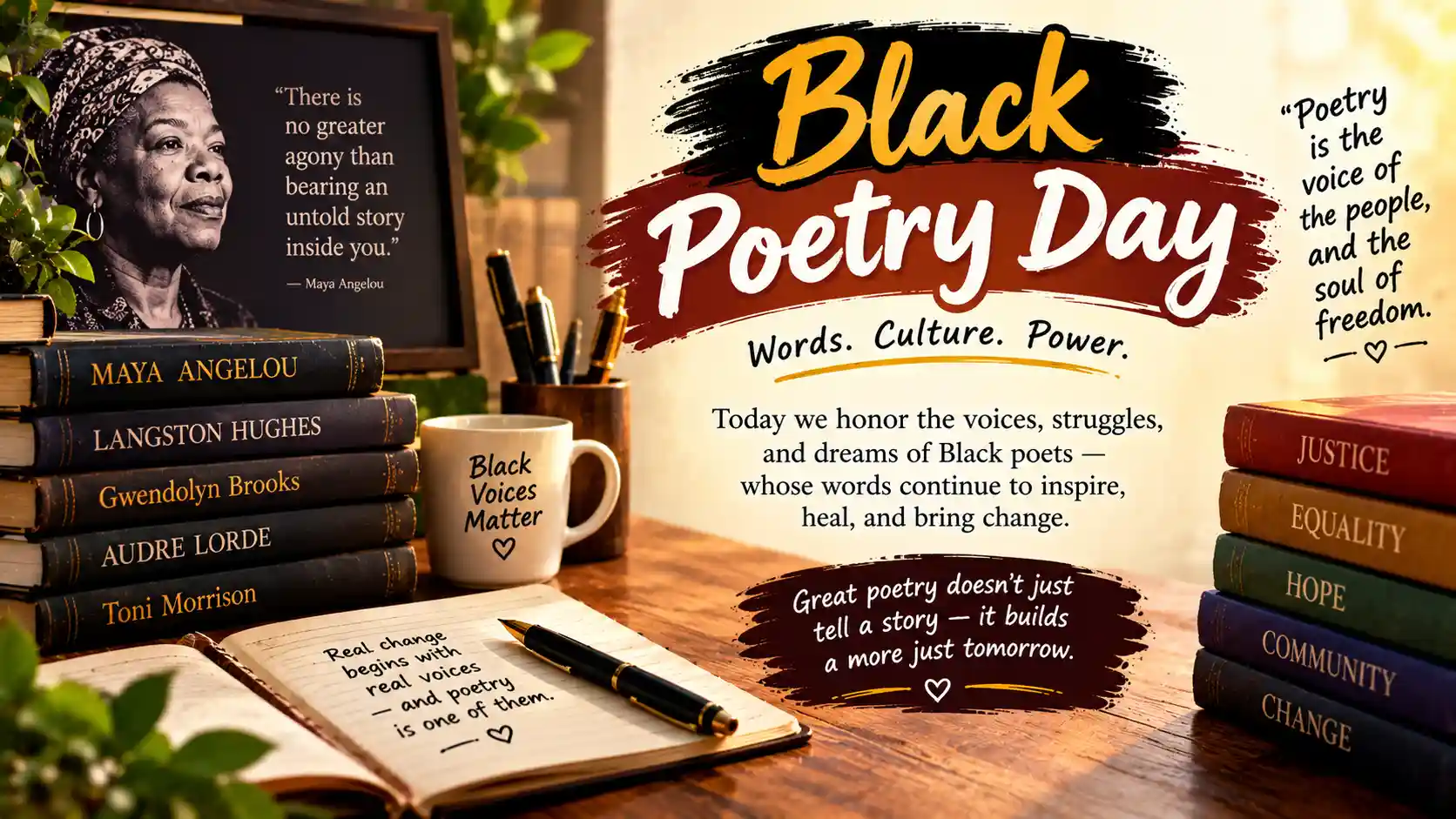
Every poem that gives a forgotten voice room to speak reminds us that every human story deserves to be heard.
Imagine a young student sitting in an American classroom, reading a poem written by a Black poet for the first time. The words describe struggles the student has never experienced, yet something about them feels familiar. There is pain, courage, hope, and a desire to be understood. Suddenly, poetry becomes more than words on a page. It becomes a bridge between hearts.
Black Poetry Day, observed annually on October 17, celebrates Black poets, their literary achievements, and the powerful stories they share through verse. It also offers an opportunity to reflect on history, identity, injustice, faith, and the strength of the human spirit.
The Bible reminds us in Proverbs 31:8, “Speak up for those who cannot speak for themselves.” This verse encourages us to listen to voices that have too often been overlooked.
Through prayer, reflection, and meaningful action, we can honor these voices with humility and love. Prayer is the turning point that helps us move from simply recognizing history to living out its lessons with compassion.
What Is Black Poetry Day?
Black Poetry Day is an annual celebration of Black poets and the contributions they have made to American literature and culture. It is observed on October 17, the birthday of Jupiter Hammon, who is widely recognized as the first published Black poet in America. His work appeared in print in 1761, during a period when enslaved Black people faced severe restrictions on their freedom and opportunities.
The day recognizes poets whose words preserve cultural memories, express personal experiences, challenge injustice, and celebrate Black identity. Their poetry can speak about family, faith, love, grief, freedom, belonging, and the hope for a more just world.
For people of faith, this observance also invites thoughtful reflection. Scripture teaches that every person possesses dignity and deserves to be treated with love. Poetry can help us understand experiences beyond our own and recognize the humanity in others.
Celebrating this day does not require being a poet or literary expert. Reading a poem, learning about a writer, supporting Black authors, or sharing a meaningful passage can be a simple way to honor their contributions.
Most importantly, this celebration reminds us that listening is an act of respect. When we make room for voices different from our own, we create opportunities for understanding, healing, and genuine connection.
20 Prayers for Black Poetry Day by Purpose
These prayers offer different ways to honor Black poets, celebrate their creativity, and reflect on the experiences their words bring to light. You can pray privately, share a prayer with a family member, or use one to open a poetry reading or community gathering.
Prayers for Creativity and Gratitude
1. Prayer of gratitude for Black poets
Gracious God, thank You for the Black poets whose words have enriched our lives and preserved important stories. Thank You for their courage to express truth, beauty, and hope. Help us appreciate their gifts with grateful hearts and open minds. May their work inspire us to see one another more clearly.
2. Prayer for creative inspiration
Creator God, bless every poet searching for the right words to express a feeling they cannot easily explain. Give them patience when inspiration feels distant and courage when their writing feels vulnerable. Let their creativity become a source of connection, understanding, and meaningful change.
3. Prayer for cultural heritage
Lord, help us honor the histories, traditions, and experiences reflected in Black poetry. Teach us to approach these stories with humility rather than assumptions. May we remember the people whose lives and sacrifices shaped the literature we read today.
4. Prayer for young writers
Father, encourage young Black writers who are discovering their voices. Remind them that their experiences, dreams, and questions deserve space on the page. Surround them with teachers, mentors, and friends who nurture their confidence and help their talents grow.
5. Prayer for literary appreciation
Heavenly Father, open our eyes to the beauty of poetry that comes from experiences different from our own. Help us read slowly, listen carefully, and learn without judgment. May appreciation become more than a feeling; let it shape how we treat others every day.
Prayers for Justice and Understanding
6. Prayer for those facing discrimination
Merciful God, stand beside those who face prejudice because of their skin color or background. Give them strength in difficult moments and surround them with people who defend their dignity. Move our communities toward fairness, and show us where we must challenge harmful attitudes within ourselves.
7. Prayer for racial understanding
Lord, soften hearts hardened by fear, stereotypes, or misunderstanding. Give us the courage to have honest conversations and the wisdom to listen without becoming defensive. Help neighbors from different backgrounds discover the shared hopes that can bring them together.
8. Prayer for historical remembrance
God of wisdom, help us remember painful chapters of history without turning away from the truth. Teach us to honor those who endured suffering and those who worked for freedom. May remembrance guide our choices so that future generations inherit greater justice and understanding.
9. Prayer for equal opportunities
Father, guide our schools, libraries, publishing houses, and cultural institutions toward fairness. Help them create opportunities for talented writers whose voices have received too little attention. May every aspiring poet have a meaningful chance to learn, create, and share their work.
10. Prayer for compassionate communities
Loving God, make our communities places where people feel safe enough to tell their stories. Teach us to replace careless words with kindness and indifference with action. Help us build relationships in which differences are respected and every person’s dignity is protected.
Prayers for Healing and Hope
11. Prayer for those carrying historical grief
Comforting God, be near those who carry grief connected to family history, racial injustice, or painful memories. Give them room to mourn without pressure to hide their feelings. Lead them toward supportive relationships, healing resources, and moments of peace.
12. Prayer for hope during difficult times
Faithful God, when injustice makes the future feel uncertain, reminds us that despair does not have to control our actions. Give us hope that leads to service, patience that supports perseverance, and strength to keep working for what is right.
13. Prayer for emotional healing through poetry
Lord, use words, music, poetry, and loving relationships to help people express what they have kept inside. Give writers wisdom when sharing painful experiences and give readers tenderness when receiving them. Let creative expression support healing without demanding that every wound be explained.
14. Prayer for courage to speak truth
God of truth, give poets and storytellers courage to speak honestly about difficult realities. Protect their commitment to integrity, and help readers receive challenging messages with thoughtfulness. May truth lead us toward responsibility rather than hatred.
15. Prayer for the next generation
Father, bless the children and young adults who will shape tomorrow’s literature. Give them imagination, critical thinking, compassion, and the confidence to ask meaningful questions. Help them learn from history while finding fresh ways to express their hopes for the future.
Prayers for Unity and Lasting Change
16. Prayer for unity across communities
God of love, brings people together across racial, cultural, and social differences. Help us understand that unity does not require everyone to have the same experiences. Teach us to respect differences while working together for dignity, fairness, and peace.
17. Prayer for wisdom in education
Lord, guide educators who introduce students to Black poetry and African American literary history. Give them wisdom to present difficult subjects honestly and sensitivity to the experiences of their students. May classrooms become places of curiosity, respect, and thoughtful discussion.
18. Prayer for libraries and cultural spaces
Provider God, bless libraries, museums, bookstores, and community centers that preserve Black literary heritage. Help them reach people who might never otherwise encounter these works. May books and poems become open doors to knowledge, empathy, and meaningful relationships.
19. Prayer for meaningful action
God, do not let our celebration end when the day is over. Show us practical ways to support Black writers, challenge unfair treatment, and encourage young voices. Give us the discipline to turn good intentions into consistent, responsible action.
20. Prayer for a more compassionate future
Eternal God, guide us toward a future in which stories are not dismissed because of the identity of their authors. Help us value truth, creativity, and human dignity. May the poems we read today inspire the kindness, courage, and fairness we practice tomorrow.
Why Black Poetry Day Can Transform Your Life
A person may begin reading poetry out of curiosity and discover something much deeper: a new understanding of someone else’s life. A poem about separation may help a reader recognize another person’s grief. A poem about freedom may challenge someone to reconsider what justice really requires.
That kind of transformation rarely happens all at once. It begins with attention, grows through reflection, and becomes meaningful when it changes how we treat people.
For Christians, this is closely connected to the call to love our neighbors. Galatians 6:2 says, “Bear ye one another’s burdens.” The verse encourages us to support people through their struggles rather than expecting them to carry everything alone.
Poetry can open the heart, but compassionate action gives understanding a purpose.
15 Powerful Black Poetry Day Prayers for Strength and Faith
Use these short reflections to guide personal prayer, journaling, or a community gathering.
- For courage: May I speak against injustice even when silence feels easier.
- For empathy: Help me understand experiences beyond my own.
- For creativity: Give writers the freedom to express their deepest truths.
- For historical truth: Teach me to remember the past honestly.
- For young poets: Encourage the next generation to write boldly.
- For educators: Give teachers patience and wisdom when discussing difficult history.
- For families: Help parents pass down stories with love and honesty.
- For healing: Comfort those whose personal or family histories hold painful memories.
- For equality: Guide our institutions toward fair treatment and opportunity.
- For libraries: Protect the spaces that keep important literature accessible.
- For friendship: Help people build relationships across cultural differences.
- For peaceful dialogue: Give us the patience to listen before responding.
- For writers facing criticism: Strengthen those who share meaningful truths despite opposition.
- For community leaders: Help them support arts programs that welcome overlooked voices.
- For lasting change: Turn our reflections into actions that serve our neighbors.
Black Poetry Day Prayers for Protection and Peace
Protection Prayers for Writers and Readers
1. Prayer for emotional protection
Loving Father, care for writers who revisit painful memories while creating their work. Give them healthy boundaries, supportive relationships, and rest when they need it. Help them understand that protecting their well-being is not a failure of courage.
2. Prayer for safe spaces
Lord, guide organizers who create poetry readings, workshops, and literary gatherings. Help them establish welcoming spaces where people can share ideas without harassment or humiliation. May respect shape every conversation.
3. Prayer for young readers
Heavenly Father, protect young readers as they encounter difficult subjects through poetry. Give them trustworthy adults who can answer questions with honesty and care. Help them develop understanding without losing their sense of hope.
4. Prayer for freedom of expression
God of wisdom, protect the ability of writers to express ideas thoughtfully and responsibly. Give communities discernment when confronting difficult words, and help them respond through dialogue, learning, and respect for human dignity.
Peace Prayers Through Poetry
1. Prayer for inner peace
Peaceful Lord, quiet my hurried thoughts as I read and reflect. Help me receive unfamiliar stories without fear and recognize the feelings they awaken in me. Let reflection guide me toward greater patience and compassion.
2. Prayer for peaceful conversations
God of understanding, helps us discuss race, history, and literature without turning disagreement into personal hostility. Give us the humility to learn, the courage to correct our mistakes, and the grace to keep listening.
3. Prayer for peace in our communities
Father, bring peace to neighborhoods affected by division and mistrust. Encourage people to meet, learn, create, and serve together. Let poetry become one of many ways we discover our shared humanity.
Black Poetry Day Prayers for Specific Situations
💼 For Writers Seeking Opportunities
God, open meaningful doors for Black poets who are seeking publication, mentorship, or a supportive audience. Give them persistence through rejection and wisdom in choosing opportunities. Help editors and publishers recognize talent fairly and create room for fresh voices.
💔 For Families Remembering Painful History
Compassionate Father, comfort families whose stories include discrimination, separation, or injustice. Help them speak about difficult memories when they are ready and preserve the stories that matter to them. May future generations receive both an honest history and the hope to build something better.
🏥 For Those Healing From Emotional Wounds
Lord, be near anyone whose memories or experiences feel overwhelming. Lead them toward trustworthy support, gentle understanding, and the help they need. May poetry offer a way to express emotions while reminding them that they do not have to face pain alone.
👨👩👧 For Families Celebrating Black Heritage
Gracious God, help families share poems, stories, and traditions with their children. Give parents the words to discuss both hardship and achievement. May these conversations nurture pride, respect for others, and a lasting love of learning.
📖 For Students Studying Black Literature
God of knowledge, guides students as they explore Black poetry and its place in history. Help them read carefully, ask thoughtful questions, and recognize the human experiences behind each poem. Give them confidence to share what they learn with respect and curiosity.
What Changes When Black Poetry Day Becomes a Habit
Imagine a family that chooses one poem each month to read together. At first, the conversations may be brief. Someone comments on a line; another asks about a historical event. Over time, questions become deeper, and family members begin listening to one another more patiently.
A single annual celebration can become the beginning of a lasting practice. Reading Black poetry throughout the year helps keep its history and creativity visible beyond October 17.
The goal is not to finish a reading list or prove how much we know. It is to become more thoughtful readers, more honest students of history, and more compassionate neighbors. Small, consistent acts of attention can shape how we understand the world.
How to Make Black Poetry Day a Daily Habit 10 Steps
- Choose one poem: Read a poem by a Black poet each week, beginning with writers whose work interests you.
- Learn about the author: Read a short biography to understand the writer’s historical and cultural context.
- Read aloud: Notice how rhythm, repetition, and sound change the meaning of the poem.
- Reflect in a journal: Write down one line that moved you and explain why it mattered.
- Connect with Scripture: Reflect on themes such as justice, mercy, dignity, and love without forcing a religious meaning onto every poem.
- Explore different eras: Read historical works alongside contemporary Black poetry to understand changing experiences and styles.
- Support Black authors: Borrow their books, purchase their work when possible, or recommend it to others.
- Share respectfully: Discuss poems with friends or family while giving proper credit to the writer.
- Attend a literary event: Visit a poetry reading, library program, or writing workshop in your community.
- Turn reflection into action: Support inclusive education, encourage emerging writers, and challenge unfair treatment in everyday life.
Faith Declarations to Strengthen Your Black Poetry Day Reflection
- I am willing to listen to stories that challenge my assumptions.
- I have the courage to learn from difficult chapters of history.
- God is teaching me to treat every person with dignity.
- I am becoming more thoughtful about the words I speak.
- I have room in my heart for experiences beyond my own.
- God is present when people work toward justice and compassion.
- I am committed to encouraging young writers and readers.
- I have the patience to listen before forming an opinion.
- God is guiding me toward a more honest understanding of others.
- I am ready to turn reflection into meaningful acts of kindness.
Quotes to Inspire Your Black Poetry Day Every Day
- “A poem can preserve the truth that a hurried world tries to overlook.”
- “When a forgotten story is read aloud, silence loses some of its power.”
- “The page becomes a meeting place for lives that might never cross.”
- “Listening to another person’s poem is a small act of human respect.”
- “History becomes more personal when we hear the voices behind it.”
- “A writer’s courage can give another person permission to speak.”
- “Poetry does not erase injustice; it helps us see what must change.”
- “A young voice deserves encouragement before the world asks it to prove itself.”
- “The beauty of a poem often begins where easy explanations end.”
- “Remembering a story is meaningful when it changes how we treat the living.”
Common Questions About Black Poetry Day Answered
When is Black Poetry Day celebrated?
Black Poetry Day is observed every year on October 17. The date honors Jupiter Hammon, whose birthday is traditionally recognized as October 17, 1711.
Why do we celebrate Black Poetry Day?
The day celebrates Black poets and their contributions to literature, history, and culture. It also encourages readers to discover overlooked writers and explore themes of identity, freedom, creativity, and belonging.
Who was Jupiter Hammon?
Jupiter Hammon was an enslaved Black American poet whose work was published in 1761. He is widely recognized as the first published Black poet in America, and his writing included Christian themes and reflections on morality.
How can I celebrate this day with my family?
Read a poem together, learn about a Black poet, visit a library, or attend a local literary event. Children can also write short poems about family, identity, hope, or something they wish others understood.
What does the Bible say about poetry and justice?
The Bible contains songs, poetic prayers, wisdom literature, and prophetic poetry. Micah 6:8 calls people to “do justly, and to love mercy, and to walk humbly” with God. This provides a meaningful starting point for reflecting on dignity, fairness, and compassionate action.
Can I celebrate Black Poetry Day through prayer?
Yes. You can pray for writers, students, educators, and communities seeking greater understanding. Pair your prayer with a practical step, such as reading a Black poet’s work or supporting a local literary program.
Final Thoughts on Black Poetry Day
Black Poetry Day gives us an opportunity to pause, listen, and recognize the people whose words have helped shape American literature. It reminds us that poems are not simply arrangements of beautiful language. They can preserve history, express grief, celebrate identity, question injustice, and carry hope into difficult times.
As you observe this day, give yourself permission to learn something new. Read a poet whose work you have never encountered. Share a meaningful poem with someone you love. If you pray, ask God to help you approach unfamiliar experiences with humility and respond to injustice with courage.
Romans 12:15 offers a simple guide: “Rejoice with them that do rejoice, and weep with them that weep.” These words encourage us to meet others with empathy rather than indifference.
Black Poetry Day is worth remembering, but its deeper purpose reaches beyond one date on the calendar. The truest tribute to a poet is not only to read their words, but to let those words make us more human.

Ahmad Khan is the founder of Prayerrz.com, a website dedicated to sharing heartfelt prayers, and inspirational content that helps people celebrate special moments and strengthen meaningful connections.